You’re deciding between a condo and a townhome in South Scottsdale, and the choices can look similar on the outside. The catch is that what you actually own, what you maintain, and how you finance can be very different. If you want a lock-and-leave lifestyle, these details matter. In this guide, you’ll compare ownership, HOA dues, maintenance, financing, and rental rules so you can pick the right fit with confidence. Let’s dive in.
What you actually own
Here’s the most important insight: in Arizona, the legal structure determines your responsibilities, not how the home looks.
- Condo: You own the interior airspace of your unit plus a shared interest in common areas like land, exterior walls, roof, and amenities. The condominium declaration and plat map define boundaries and responsibilities.
- Townhome: It can be one of two legal forms.
- Fee-simple townhome: You own the land and structure. You may still pay HOA dues for shared areas.
- Condo-style townhome: It looks like a townhome but is legally a condo, so you own the interior airspace and share exterior elements.
What this means for you: never assume by appearance. The recorded CC&Rs, declaration, and plats tell you where ownership lines sit and who maintains which components.
Quick comparison: ownership, maintenance, financing
| Topic |
Condo |
Townhome (fee-simple) |
Townhome (condo-form) |
| Ownership |
Interior airspace + shared common elements |
Land + exterior structure on a private lot |
Interior airspace + shared common elements |
| Exterior maintained by |
Usually HOA master policy/HOA vendors |
Often the owner unless HOA covers certain items |
Often the HOA like a condo |
| Typical insurance |
HO-6 walls-in policy |
HO-3 or HO-5 dwelling policy |
HO-6 walls-in policy |
| Financing |
Project approval may be required; stricter lender review |
Often treated like single-family; generally more flexible |
Same project scrutiny as condos |
| HOA dues tendency |
Often higher due to amenities and exterior coverage |
Often lower if fewer amenities; maintenance varies |
Often similar to condos |
| Rental rules |
Defined by HOA plus city rules |
Defined by HOA plus city rules |
Defined by HOA plus city rules |
HOA dues and rules that impact your costs
South Scottsdale communities often include landscaping, exterior repairs, pools, and gates in the HOA. Dues vary based on several drivers:
- Amenities: Pools, fitness rooms, community centers, and gated entries raise operating costs.
- Maintenance scope: Roofs, exterior paint, irrigation, pest control, and utilities coverage push dues higher.
- Reserves and studies: Well-funded reserves lower the risk of special assessments; older buildings without strong reserves may face higher dues or assessments.
- Building age and complexity: Older complexes typically require more capital planning and can carry higher ongoing costs.
To protect yourself, ask for these documents during due diligence:
- CC&Rs, bylaws, and rules and regulations
- Current budget and recent financials
- Reserve study and reserve contribution policy
- Board meeting minutes for the last 12 to 36 months
- Master insurance certificate with limits and deductibles
- Assessment history and any pending special assessments
- Delinquency rates and the percentage of rented units
If you want a true lock-and-leave home, you might prefer a community where the HOA handles most exterior items and is well funded. Higher dues can be reasonable when they reduce risk and personal time commitment. Very low dues can be a red flag for deferred maintenance.
Maintenance and amenities for lock-and-leave living
In South Scottsdale’s desert climate, summer heat, intense sun, and monsoon storms are the norm. That environment shapes your maintenance.
- Condos: HOAs typically handle the roof, exterior, landscaping, and shared amenities. You handle interiors and sometimes balcony elements.
- Townhomes: If fee-simple, you may maintain the roof, exterior paint, private yard, and driveways unless your HOA covers certain items. If the townhome is a condo legally, exterior items may be HOA responsibilities.
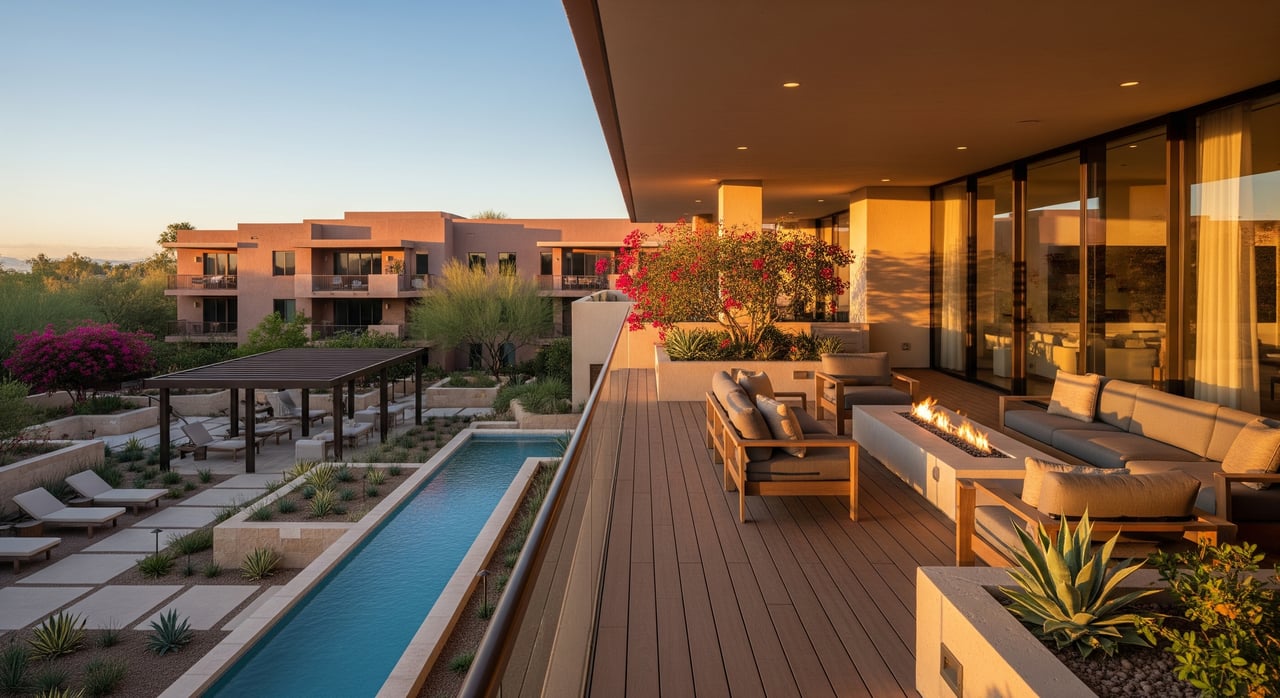
Common amenities and services you’ll see include pool and spa, fitness centers, gated entries, covered parking or garages, and sometimes on-site management. Luxury properties may offer social rooms, rooftop spaces, and secure storage, which are popular with seasonal owners.
Seasonal-owner checklist for smooth absences
- Who handles winterization or extended absence steps: HOA or owner?
- Is there on-site management or a vetted local property manager?
- How are mail, packages, and periodic HVAC checks handled?
- What are the protocols for monsoon events, leaks, and drainage issues?
- Are utilities included in dues, and what needs to be shut off or put on vacation mode?
Financing and insurance to plan early
Financing rules can differ more than you think.
- Condos: Many lenders apply project-level reviews. Factors include owner-occupancy ratios, HOA delinquency levels, and the presence of commercial space. Some loan programs require formal condominium project approval.
- Townhomes on fee-simple lots: Often qualify like single-family homes with fewer project-level hurdles.
- Condo-form townhomes: Treated like condos for lender review.
Insurance also differs based on legal form.
- Condo: You typically carry an HO-6 walls-in policy. The HOA’s master policy covers exterior and common areas. Confirm master policy deductibles and what falls to the owner after a claim.
- Fee-simple townhome: You usually need a broader HO-3 or HO-5 policy that covers the building, roof, deck, and yard.
Two practical tips:
- Ask your lender early about project eligibility and any approval lists that could affect your loan options.
- Get quotes from an insurance agent that reflect the actual HOA master policy and your legal ownership so you understand the true cost.
Renting in Scottsdale: what to verify
If you plan to rent your home when you are away, you need to check two separate rule sets before you buy.
HOA rules: Many HOAs set minimum lease terms, require tenant registration or move-in fees, limit the number of rentals at one time, or prohibit short-term rentals. These rules vary by community and often change over time.
City rules: Scottsdale requires registration and compliance with local safety and contact requirements for short-term rentals. Rules can change, and certain neighborhoods may have additional conditions. Confirm current requirements directly with the city before you rely on rental income in your plans.
Investor takeaway: Rental caps or high owner-occupancy requirements can affect both your rental income and your future resale options. Lenders also look at rental ratios for condo projects.
Lifestyle trade-offs in South Scottsdale
Your lifestyle priorities should steer the choice.
- Convenience and walkability: Condos near Old Town often sit close to dining, galleries, and shopping. You get access and ease, sometimes with covered parking and staffed common areas.
- Privacy and storage: Fee-simple townhomes often offer private garages, small yards, and more storage. That can be appealing if you want a bit more separation and space.
- Lock-and-leave ease: Many seasonal owners value buildings with robust exterior coverage, on-site management, and strong reserves.
- Cost balance: Condos can come with higher monthly dues that reduce out-of-pocket maintenance. Townhomes may have lower dues but more owner responsibility and variable costs.
Buyer checklist: documents and questions
Here’s a practical checklist you can use before you make an offer or during your inspection period.
Documents to request
- CC&Rs, bylaws, and community rules
- Current year budget, recent financials, and reserve study
- Board meeting minutes for the last 12 to 24 months
- Master insurance certificate with limits, exclusions, and deductible amounts
- Special assessment history and any planned projects
- Delinquency report and owner vs tenant mix
- Plat map or recorded lot map showing unit boundaries
- Any pending litigation involving the HOA
Questions to ask
- Is the property legally a condominium or a fee-simple lot?
- What does the HOA’s master insurance cover, and what is the deductible?
- Which utilities are included in dues, if any?
- How are monsoon-related repairs handled? Any recent water intrusion or roof claims?
- Are short-term rentals allowed? What is the minimum lease term, and what registrations are required?
- Is there on-site management or a preferred property manager for absentee owners?
- Are there owner-occupancy or rental caps that could affect financing or resale?
Local checks and resources
- Maricopa County Assessor: confirm parcel details and tax history.
- City of Scottsdale: verify short-term rental registration and local rules.
- Your lender: confirm whether the project is eligible for your loan type.
- Community Associations Institute resources: learn best practices for HOA budgets and reserves.
How to choose with confidence
If you want worry-free seasonal living, focus on the legal form, the HOA’s financial health, and the maintenance scope rather than just the building style. Study the documents, confirm insurance needs, and speak with your lender and insurance agent early. With the right due diligence, you can enjoy the South Scottsdale lifestyle with clarity about costs, responsibilities, and rental flexibility.
If you want a clear, structured path from shortlist to signed closing, connect with a boutique advisor who blends design sense with disciplined process. Reach out to Miki Nakajima to compare specific South Scottsdale communities, review HOA documents, and align your purchase with your lock-and-leave goals.
FAQs
What is the legal difference between condos and townhomes in Arizona?
- A condo owner typically holds interior airspace plus shared common areas, while a townhome can be fee-simple land and structure ownership or a condo-form townhome that functions like a condo; the recorded documents control.
How do HOA fees differ in South Scottsdale condos vs townhomes?
- Condo communities often have higher dues due to amenities and exterior coverage, while fee-simple townhomes may have lower dues but more owner maintenance responsibility; always check budgets and reserves.
What insurance do I need for a condo or townhome in Scottsdale?
- Condos usually require an HO-6 walls-in policy coordinated with the HOA’s master policy, while fee-simple townhomes usually need HO-3 or HO-5 dwelling coverage for the structure and roof.
Can I use an FHA loan to buy a South Scottsdale condo?
- Possibly, but many condos require project approval for FHA; townhomes on fee-simple lots are often financed more like single-family homes with fewer project-level hurdles.
Are short-term rentals allowed in South Scottsdale condos and townhomes?
- It depends on both HOA rules and City of Scottsdale requirements; many HOAs restrict minimum lease terms or limit the number of rentals, and the city requires registration and safety compliance.
What documents should I review before buying into an HOA community?
- Review CC&Rs, bylaws, rules, budgets, financials, reserve study, board minutes, master insurance certificate, assessment history, delinquency report, and any pending litigation.